

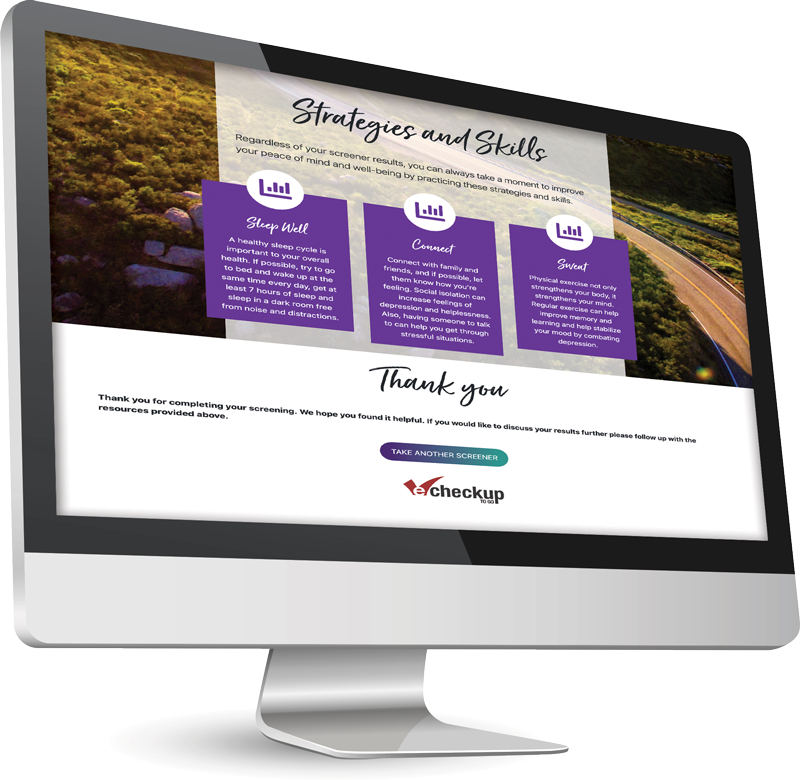
What is the eCHECKUP TO GO?

The eCHECKUP TO GO programmes are personalised, evidence-based, online prevention interventions for Alcohol & Marijuana developed by counsellors and psychologists at San Diego State University.

Drawing on Motivational Interviewing (Miller & Rollnick, 2002) and Social Norms Theory (Perkins & Berkowitz, 1986), the eCHECKUP TO GO programmes are designed to motivate individuals to reduce their consumption using personalised information about their own drinking and risk factors. The programmes were designed and are updated with the most current and reliable research available.

The eCHECKUP TO GO programmes are currently in use on over 550 universities and colleges across in 49 states, in Canada, Australia and Ireland. How are these campuses using the eCHECKUP TO GO programmes? See Best Practises

Completing the eCHECKUP TO GO

The basic alcohol and marijuana interventions take 20-30 minutes to complete. The programmes are self-guided and require no face-to-face contact time with a counsellor or administrator.

Should a campus administrator, counsellor or faculty member want the student to spend more time reflecting on and responding to their feedback, the student can be asked to complete the companion "Personal Reflections" programme.

The Personal Reflections programme requires an additional 15-20 minutes and asks students to respond to questions designed to deepen their thoughtful examination of their personal choices and the social norms surrounding and influencing their use of alcohol. The specific questions are determined by each individual student's unique eCHECKUP TO GO profile.

Because they are offered online, the eCHECKUP TO GO programmes can provide quick, confidential feedback in multiple settings. This also allows a student to complete a personal 'check-up' on multiple occasions to track changes in use and risk behaviour.

The personal feedback, used in conjunction with counselling, or as a stand-alone intervention, includes information that has been shown to be particularly motivating to high school and college-aged young adults:

  • Quantity and Frequency of Use
  • Amount Consumed
  • Normative Comparisons
  • Physical Health Information
  • Amount and Percent of Income Spent
  • Negative Consequences Feedback
  • Explanation, Advice and Local Referral Information